
15 years of sunshine: British solar farms turn 15
19 June 2026
High-quality photographs of solar installations are available for download here.
As the UK approaches the summer solstice – European Solar Day – on Sunday, the British solar sector is marking 15 years since the country's first utility-scale solar farm began generating electricity.
In that short but revolutionary period of time, the sector went from being barely a footnote in the energy sector, to generating 46% of Great Britain’s power at one point earlier this year.[1]
This spring, solar generation reached a record peak of 16.3 gigawatts, smashing the 2025 record by 2.3GW. At midday on 10 April, solar supplied 46% of Great Britain’s power, pushing gas-fired generation to a record low and demonstrating the growing role of renewable energy in the national grid.
As of 2024, the solar sector employed 13,000 people, contributing £1.3bn to the economy each year – or 20,400 jobs and £1.9bn if the closely-related battery energy storage industry is included. By 2035, the two sectors are expected to contribute £5.1bn and provide almost 45,000 jobs.[2]
In 2011, solar accounted for less than 0.07% of Great Britain’s electricity mix.[3] Last year, it rose to 6.5%.[4] Over the same period, dependence on coal-fired power fell from 29% to nothing at all.
As the sector continues to expand, such records will not stand for long.
The first solar farm
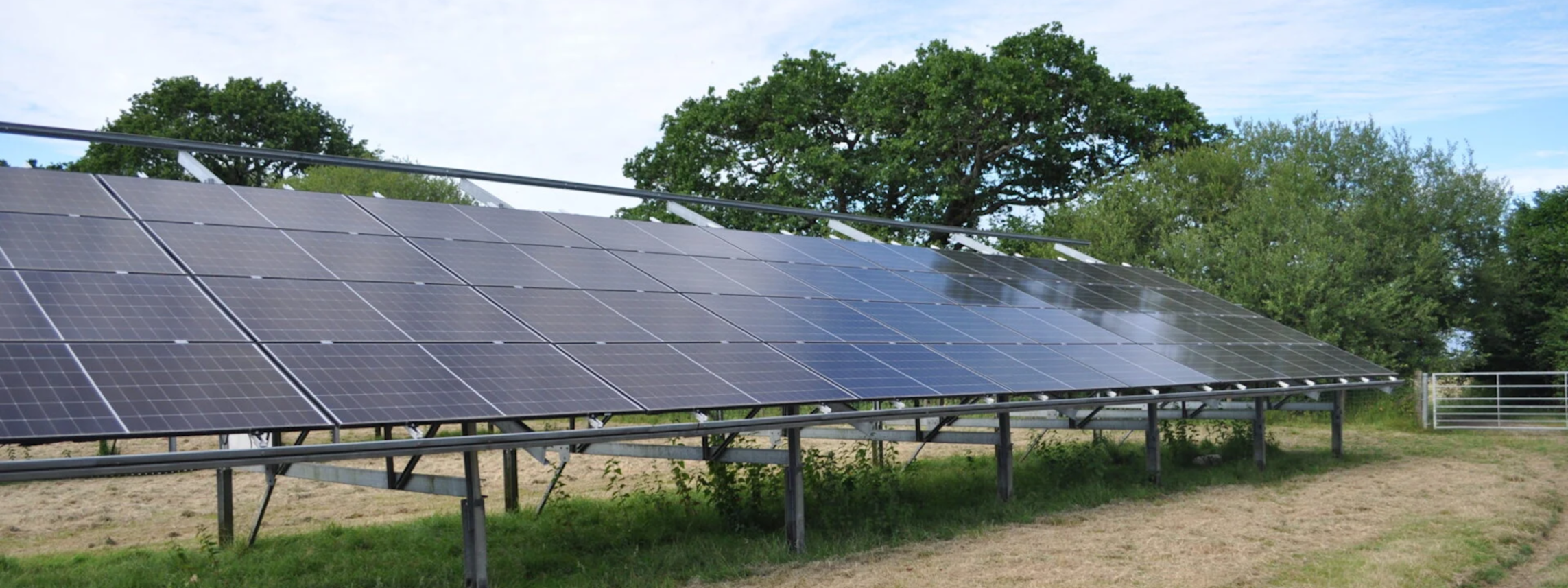
Since the commissioning of the J B Wheaton & Sons Ltd site in Somerset by KWTN Solar Ltd in June 2011, solar energy has evolved from a pioneering technology into a cornerstone of the UK's energy system, delivering affordable energy, energy security, climate action and marked benefits for nature, too. Several other such sites were commissioned within days of the first, including the one-megawatt Lowe Coombe Farm site in Somerset and the 1.8MW Wheal Jane solar farm in Cornwall.
An event to mark the occasion will be held at the J B Wheaton & Sons distribution depot at 4pm on Saturday, coinciding with the arrival of former TV presenter and experienced automotive expedition leader Jeremy Hart, who is conducting the very first solar-powered road trip by production EV from Land’s End to John O’Groats, sponsored by charging company Easee and Renault. He will be visiting numerous notable solar installations along the way to charge up.
Please RSPV to Gareth Simkins on [email protected] if you would like to attend.
Britain’s solar sector today
Today, more than 25GW of solar capacity is operational on rooftops and on the ground across the UK, going by industry estimates, powering homes and businesses with cheap, homegrown electricity. This growth has transformed solar into one of the country's least expensive sources of new power generation, helping reduce reliance on expensive imported fossil fuels and shielding consumers from volatile global energy markets.
“The success of Britain’s solar sector over the past 15 years, alongside the wider renewables sector, is clearly something to celebrate. It’s nothing short of a revolution in how we power the nation, with clean, green and cheap energy. And as farmers with solar sites on some of their land say themselves, the sector is contributing to food security by helping to keep them in business of growing food, in the face of mounting climate-related losses,” said Chris Hewett, Chief Executive of Solar Energy UK.[5,6]
More than 1,200 ground-mounted installations are now operating, ranging from the 373-megawatt Cleve Hill site to 150 kilowatts powering a Vale of Evesham fruit and vegetable distributor. A further 1,600 are either in construction or are in the planning pipeline.[7]
There are now more than two million small-scale solar installations in Great Britain, the vast majority of them on home rooftops.[8] At current rates, the three millionth will arrive in four years, though coming policy measures indicate that it will come sooner.
The commercial-scale market, for installations on the likes of supermarkets, warehouses and factories, is also highly active, though numbers are difficult to judge.
Benefits
Alongside delivering lower-cost electricity and greater energy independence, solar has helped avoid millions of tonnes of greenhouse gas emissions over the past 15 years, playing a significant role in the UK’s decarbonisation progress.
The benefits extend beyond energy generation and climate protection. Solar developments continue to support rural economies, create jobs and provide millions of pounds in community benefit funding for local projects and initiatives across the country, plus pay millions of pounds of business rates to local councils.
Solar farms’ role in enhancing the natural environment should also not be neglected. Numerous ecological surveys and academic studies have found them to be bursting with wildlife compared to surrounding areas.[9]
Solar remains the most popular source of energy among the public according to official polling.[10] However, the public continues to assume that solar farms are less popular than they really are, an effect most acute among politicians.[11] Solar farms have also been shown to be most popular in the areas around where they have been built already, illustrating how myths and misinformation about the sector abate when confronted with reality.[12]
While some voices continue to spread myth and misinformation, national priorities remain clear.[13] The public want lower energy bills, greater energy security, quality jobs and a stronger economy, and they increasingly recognise that clean energy infrastructure is essential to delivering all four. Recent polling shows that most people see renewable energy not just as a climate solution, but as a practical investment in the UK's future prosperity and resilience.[14]
[1] Historic GB Generation Mix – NESO
[2] The economic impact of solar and battery storage – Solar Energy UK
[3] Electricity fuel use, generation and supply (DUKES 5.6) – DESNZ
[4] Britain's Energy Explained: 2025 Review - NESO
[5] Farming sustainably: How solar energy is saving agriculture – Solar Energy UK
[6] UK farmers lose £800m after heat and drought cause one of worst harvests on record – The Guardian
[7] Renewable Energy Planning Database - DESNZ
[9] Solar farms can protect ‘iconic’ wildlife, says RSPB – Solar Energy UK
[10] DESNZ Public Attitudes Tracker
[11] Tracker data: MPs and the public continue to underestimate local backing for wind, solar and pylons – Climate Barometer
[12] Solar farms more popular than ever but myths threaten ability to tackle climate and ecological disaster – Solar Energy UK
[13] Industry claps back at Reform’s anti-solar rhetoric – Solar Energy UK
[14] Public backs clean power to strengthen UK energy security – Solar Energy UK and other energy trade bodies
– ENDS –
Editor’s notes:
About KWTN Solar Ltd, Solar South West, and JB Wheaton & Sons: KWTN Solar Ltd (Keeler/Wheaton/Tippett/Noyes) was established in 2010 to develop and fund the construction of the solar farm at JB Wheaton and Sons. Solar South West (SSWUK Ltd) was established by KWTN and another local company, AH Warren Trust Ltd, at the same time to construct and maintain the solar farms for the shareholders and subsequently build and maintain projects for external customers. KWTN has been instrumental in developing over 400MWp of solar projects in the UK and New Zealand. Solar South West has designed, built and commissioned over 500 projects in the UK since 2011. JB Wheaton and Sons is a transport and distribution company established in 1932 and remains in family ownership.
For more information or to request an interview, please contact:
Gareth Simkins, Senior Communications Adviser
[email protected] | solarenergyuk.org
About Solar Energy UK: Solar Energy UK is the largest trade association representing the solar and battery storage sector. It represents over 400 member organisations. Its membership includes companies working across both rooftop and ground-mounted solar - delivering projects that contribute to a clean, secure energy system and help reduce energy bills for homes and businesses.